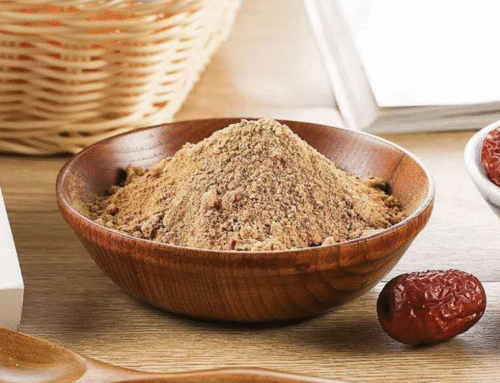
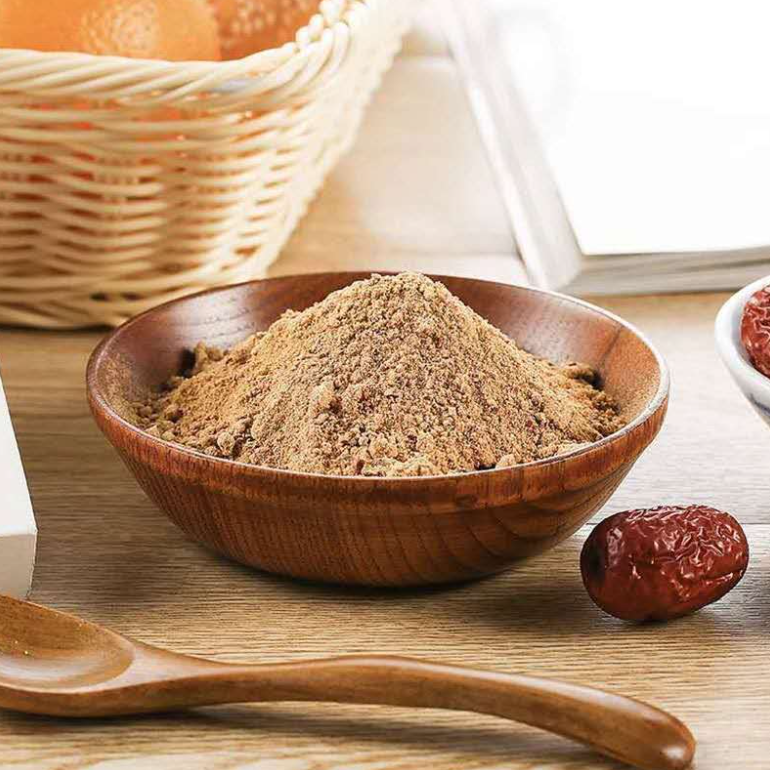
Mango powder is one of those ingredients that looks simple in a jar. Still, the moment it hits a blending room—humid air, warm conveyors, a protein base that hates dispersing—small differences become big. That’s why this guide stays on one track: how freeze-dried mango powder performs in everyday production, and how to evaluate a mango powder manufacturer without guessing. Even better, it keeps the focus on repeatable quality: traceability, process control, batch consistency, and the specs that actually affect rehydration, aroma, and storage.
What freeze-dried mango powder is (and what it is not)
Freeze-dried mango powder starts with mango fruit, then uses low-temperature drying under vacuum before milling. So, instead of “cooking down” the flavor, the process aims to keep mango’s lighter aromatics and bright color intact.
Meanwhile, it helps to separate freeze-dried powder from other mango powders. Spray-dried mango powders are often made from puree or juice plus carriers to help drying. Heat-dried mango powders can lean toward a deeper, more caramel note. Freeze-dried mango powder usually sits on the fresher end of that spectrum, especially in cold applications.
Also, freeze-dried mango powder tends to act like a sponge around moisture. That sounds obvious, yet it explains most real production issues: clumping, bridging in hoppers, and aroma loss after opening. So, packaging, water activity, and particle size matter as much as “mango taste.”
On the product specification side, Hailian’s freeze-dried mango powder is described as a freeze-dried powder with yellow color, typical mango flavor, and moisture listed at <7%, with bulk packaging options noted as 10–25 kg/bag/carton plus smaller custom packs.

Why “freeze-dried” changes everyday performance
Freeze-drying removes water while keeping structure relatively intact, and that influences how the powder behaves later. For example, in a 20 kg dry blend run, a powder that wets fast will disappear into the base quickly. However, a powder with slow wetting can float, form “fish eyes,” and leave specks in the final drink.
Additionally, the milling step matters more than people expect. A very fine grind gives fast flavor release, but it can dust more and clump easier. A slightly coarser grind may flow better, yet it can feel gritty in low-fat dairy if not dispersed correctly.
Why the manufacturer view matters (quality is built before the bag is sealed)
A good formulation plan can fail if the supply side is vague. So, the manufacturer view is worth spelling out: raw material selection, process controls, and the boring discipline around records and retention samples.
Raw material traceability: the “boring paperwork” that saves a launch
Traceability is not a marketing extra. Instead, it’s the practical ability to connect each batch back to mango lots, harvest windows, and receiving checks.
In a typical factory flow, raw mangoes arrive, get sorted, then move through washing, trimming, and slicing before freezing. At that point, a traceability system ties the lot number to processing dates and equipment lines. Later, if a batch shows darker color or weaker aroma, the investigation has a clear starting point instead of guesswork.
Also, a clean traceability story supports import documentation and internal audits. That matters when a new market opens and suddenly requires deeper records.
Process control points that affect mango powder more than people think
Freeze-dried mango powder has a few control points that directly show up in applications:
-
Fruit maturity and slicing thickness: thicker slices dry slower and can create uneven moisture pockets.
-
Freezing step: faster freezing helps preserve structure; slower freezing can create larger ice crystals and change texture after drying.
-
Primary drying and secondary drying: these steps influence residual moisture and water activity, which drive clumping risk.
-
Milling temperature and time: excessive heat during milling can dull aroma over time.
Meanwhile, these control points don’t need a long speech in a brochure. Still, they should be explainable in a short technical call, with clear “what gets checked, when, and how it’s recorded.”
Batch consistency: where most supply relationships win or lose
Consistency is not only “same taste.” It’s also: same dispersion time, same shade of yellow, same flow in a hopper, and the same aroma after storage.
So, a solid approach usually includes:
-
Defined in-process checks (moisture checkpoints, sieve checks, sensory checks).
-
A retention sample plan (keeping a sealed sample per batch for a defined period).
-
A change control habit (when farms, seasons, or processing parameters shift, it gets documented).
Also, retention samples are surprisingly powerful. When a team opens last month’s retained batch and compares it to the newest delivery under the same lighting at 10:00 a.m., differences become obvious fast.
Metal detection and foreign matter control: the quiet non-negotiables
Foreign matter control is rarely discussed in public writing, yet it’s a core “manufacturer reality.” Most well-run lines use layered controls, such as:
-
screening/sieving after milling
-
magnets where appropriate
-
visual checks during packing
-
metal detection before final carton sealing
Importantly, these controls should be verifiable through records and standard operating procedures, not just a promise. So, it’s reasonable to request a brief description of the foreign matter control plan during qualification.
Quality system documentation: what can be provided or requested
A manufacturer-grade supply relationship usually comes with documentation that can be shared on request, such as:
-
a current specification sheet
-
a recent COA for the exact item and batch
-
microbiological results aligned to agreed limits
-
allergen statement and ingredient statement (carrier/no carrier)
-
packaging spec (inner liner material, carton type, sealing method)
Hailian’s site describes its business as focusing on dehydrated vegetables, vegetable powders, freeze-dried fruits, and fruit powders, including freeze-dried mango.
Specs to check (the short table that prevents long problems)
Below is a practical “specs to check” table that can be used when qualifying a freeze-dried mango powder manufacturer, a bulk mango powder supplier, or a factory producing mango powder for multiple applications. While target values should match the destination market and product category, the table gives the core items that affect performance.
| Spec item | Typical target / what to define | What to look for in COA / documents | Why it matters in real applications |
|---|---|---|---|
| Moisture (%) | Often set low for powders; define an upper limit | Moisture test method + result per batch | Drives clumping, shelf stability, flow, and aroma retention |
| Water activity (aw) | Define an upper limit (commonly requested for stability) | aw value + test method + sampling plan | Predicts microbial stability and moisture-driven caking better than moisture alone |
| Particle size | Define range (mesh or microns) for application | Sieve report or PSD data; “fine/standard” grade definition | Impacts dispersion, dusting, mouthfeel, and hopper flow |
| Micro limits | Define limits: TPC, yeast/mold, coliforms, pathogens as required | Micro panel results + lab method + pass/fail against limits | Avoids surprises in dairy, supplements, and ready-to-mix beverages |
| Color standard | Define target (visual standard or Lab* range) | Color record per batch; reference standard used | Controls “same-looking product” across seasons and lots |
| Carrier / ingredient statement | Confirm “100% mango” or define carrier type and % | Ingredient statement; allergen statement; processing aids | Affects label, sweetness perception, solubility, and flavor intensity |
| COA content | Define minimum COA fields | Batch ID, date, moisture, aw, micro, color, heavy metals (if required) | Ensures every shipment is traceable and comparable |
Hailian’s freeze-dried mango powder listing includes moisture <7%, and describes it as a freeze-dried mango powder with yellow color and typical mango flavor.
Why each spec changes results (even when the powder “tastes fine”)
Moisture is the fast indicator for caking risk. However, moisture alone can miss how “available” that water is, which is why aw matters.
Water activity (aw) is often the better predictor of shelf behavior. For example, two powders can both show 5% moisture, yet the one with higher aw can cake earlier in a warm warehouse.
Particle size changes the daily workflow. Finer powder disperses quickly but can float, dust, and cling to scoops. Meanwhile, coarser powder flows better but may feel gritty in a low-fat yogurt base unless the mixing sequence is adjusted.
Micro limits should match the application and market. Dry powder is not sterile, and dairy or supplement systems can be sensitive. So, a defined micro panel avoids guessing.
Color standard keeps brand visuals stable. Mango powders naturally vary by season and fruit maturity. Therefore, a simple color reference prevents the “why is this batch darker?” debate at the worst possible moment.
Carrier/ingredient statement is a label and performance issue. “100% mango powder” behaves differently from a powder that includes carriers, and that difference shows up in sweetness, solubility, and dosing.
COA content is the backbone of consistency tracking. Without a consistent COA, each batch becomes a fresh argument instead of a controlled ingredient.

Everyday uses by industry (with dosing, mixing order, and common fixes)
This section stays concrete. Each industry example includes typical use ranges, an order-of-addition plan, and the problems that show up at scale.
Beverage powders and instant drink mixes
Mango powder performs well in beverage powders because it adds aroma and color without adding water. Still, rehydration behavior matters more than flavor descriptions.
Typical use range
-
Light mango note: 0.3–1.0% of finished dry mix
-
Clear mango presence: 1.0–3.0%
-
Strong “mango-forward” profile: 3.0–6.0%
(Meanwhile, exact levels depend on base sweetness and acid balance.)
Mixing order that works in real blending rooms
-
First, pre-blend mango powder with a “carrier base” like sugar or a neutral powder at a 1:5 to 1:10 ratio.
-
Next, add that pre-blend into the full batch while the mixer is running.
-
Then, add acids, salts, and intense flavors later to avoid trapping mango aroma early.
-
Finally, add fine functional ingredients (vitamins, sweeteners) after flow looks stable.
Common issues and quick solutions
-
Floating or slow wetting: often linked to very fine powder plus low agitation. So, a pre-blend step and a short “paste slurry” method in R&D testing reduces specks.
-
Mango note feels weak: sweetness may be masking it. Therefore, lowering sweetness slightly can make mango feel louder at the same dosage.
-
Clumping in sachets: moisture ingress is usually the culprit. So, improving barrier packaging and adding a short desiccant test during stability work helps.
Dairy, yogurt, and frozen desserts
Mango powder fits dairy because color reads immediately and aroma sits well with fat. However, dairy systems also reveal grit and dispersion problems fast.
Typical use range
-
Yogurt base: 0.5–2.0%
-
Ice cream / gelato base: 0.3–1.5%
-
Milk beverages: 0.2–1.0%
Mixing order that avoids grit
-
First, disperse mango powder into a small portion of the liquid phase at 20–30°C with strong shear.
-
Next, add that dispersion into the main tank before stabilizers fully hydrate.
-
Then, add stabilizers and proteins, allowing time for full hydration.
-
Finally, adjust sweetness and acidity after mango aroma is confirmed.
Common issues and practical fixes
-
Grainy mouthfeel: particle size can be too coarse for low-fat systems. So, defining a tighter particle size range or using higher shear dispersion helps.
-
Color fades after a week: oxidation and light exposure can be drivers. Therefore, light-protective packaging and oxygen control in finished products matter.
-
Aroma seems “flat” in frozen dessert: very cold systems mute aroma. So, a slightly higher dosage or a small tweak in vanilla/cream notes can lift mango perception.
Bakery, pastry, and dessert components
High heat can dull mango aroma, so bakery wins usually come from fillings, glazes, and creams rather than long-bake doughs.
Typical use range
-
Frostings and buttercreams: 0.5–2.5%
-
Glazes: 0.3–1.5%
-
Cake batters: 0.2–1.0% (often subtle after baking)
-
Fillings (custard-style): 0.3–1.2%
Mixing order that protects aroma
-
First, blend mango powder into sugar or a dry base to prevent clumps.
-
Next, add into fat phases or syrups after temperature drops below 40°C, when possible.
-
Then, adjust salt and acidity carefully, because tiny changes swing mango brightness.
-
Finally, rest the filling for 10–20 minutes to allow full hydration before final texture decisions.
Common issues and fixes
-
Brownish color in baked goods: heat plus sugar chemistry can shift color. So, keeping mango powder primarily in fillings or post-bake glazes helps.
-
Mango disappears after baking: bake time may be too long for a delicate top note. Therefore, shifting dosage to a glaze or cream layer preserves impact.
-
Clumps in icing: low water plus fast mixing can trap dry pockets. So, sifting and slow addition reduces “mango freckles.”
Nutrition blends and protein systems
Protein systems can be unforgiving. Mango powder can work well, yet it needs the right mixing logic.
Typical use range
-
Protein powders: 0.5–3.0%
-
Meal replacement blends: 0.8–4.0%
-
Pre-workout or functional mixes: 0.2–1.5%
Mixing order that reduces incompatibility
-
First, pre-blend mango powder with the main carbohydrate component.
-
Next, add proteins and fibers gradually to avoid immediate agglomeration.
-
Then, add acids and electrolytes late, because they can change how powders wet.
-
Finally, run a short “flow check” before packing, because protein blends can bridge unexpectedly.
Common issues and fixes
-
Mango note feels chalky: the base may be dominating mouthfeel. So, pairing mango with a cream note (without changing the mango focus) can soften perception.
-
Poor dispersion: some proteins repel water early. Therefore, a slightly larger particle size range or a small agglomeration step in finished blends can help.
-
Sweetness hides mango: high-intensity sweeteners can flatten fruit nuance. So, adjusting sweetener type or reducing peak sweetness can reveal mango again.
Snack seasoning, dry rubs, and savory-adjacent blends
Mango powder can bring sweetness and aroma to snack seasonings, especially in sweet-spicy profiles. Still, humidity is the enemy on seasoning lines.
Typical use range
-
Seasoning blends: 0.3–2.0%
-
Coatings: 0.5–3.5%
-
Sweet-spicy rubs: 0.8–4.0%
Mixing order that reduces caking
-
First, blend mango powder with salt or sugar to distribute it evenly.
-
Next, add anti-caking aids if the blend standard allows it.
-
Then, add oils (if any) carefully, because oils can cause mango powder to smear.
-
Finally, pack quickly and keep open bins covered during production.
Common issues and fixes
-
Seasoning clumps on the line: humidity control and fast sealing matter most. So, improving barrier packaging often fixes more than reformulating.
-
Uneven flavor hits: particle size mismatch can cause segregation. Therefore, aligning powder sizes across the blend reduces “hot spots.”
-
Color dusting in packaging: very fine mango powder can migrate. So, a slightly coarser grade or agglomerated blend may help.
Common failure cases and solutions (the stuff that actually happens)
Problems below show up repeatedly in real production. Each includes the likely cause and a corrective action that is realistic at factory scale.
1) Caking and hard clumps in storage
Likely cause: moisture pickup during storage, plus aw drifting upward.
Corrective actions: improve barrier packaging (inner liner quality matters), reduce open-time during packing, and define a lower aw target in the spec. Also, confirm storage conditions match “cool and dry,” because warm warehouses speed up caking.
2) Floating powder and “fish eyes” during rehydration
Likely cause: very fine particles with poor wetting, especially in cold water.
Corrective actions: pre-blend with sugar or a larger particle base, then use stronger agitation at the start. Meanwhile, R&D can test a simple two-step method: wet a small slurry first, then dilute into the full volume.
3) Color looks darker batch-to-batch
Likely cause: raw mango maturity differences, oxidation, or slight process shifts.
Corrective actions: define a color standard (visual reference or Lab* range), and request batch color records. Also, retention samples make comparisons easier when investigating.
4) Aroma fades quickly after opening
Likely cause: volatile aromatics escaping, plus oxidation from repeated opening.
Corrective actions: re-pack into smaller inner bags for frequent-use operations, reduce headspace oxygen where possible, and store away from heat and strong light.
5) Mango tastes “muted” in sweet formulas
Likely cause: high sweetness levels mask fruit nuance; the mango is present but covered.
Corrective actions: reduce sweetness slightly, or rebalance acidity to bring back brightness. Also, verify the mango dosage is placed where it can be perceived (for example, in a top-note layer like a glaze or aroma-forward beverage base).
6) Poor compatibility with protein or fiber systems
Likely cause: proteins and fibers change wetting and trap aroma, creating a chalky or flat impression.
Corrective actions: adjust mixing order (mango first, protein later), consider a slightly different particle size range, and test with realistic shear. Meanwhile, bench tests should mimic plant mixing, not spoon stirring.
7) Bridging and poor flow in hoppers
Likely cause: fine powder, static, and slight moisture pickup create arching.
Corrective actions: tighten moisture/aw control, improve anti-static handling, and verify particle size distribution. Also, ensure liners stay sealed until use.
8) “Speckling” in dairy creams or icings
Likely cause: incomplete hydration or dry pockets trapped during fast mixing.
Corrective actions: sift first, add slowly, and allow a short rest for hydration before final viscosity decisions.
Choosing a mango powder manufacturer: a procurement checklist that stays technical
Selecting a freeze-dried mango powder manufacturer is not only price and lead time. Instead, it’s the ability to deliver the same performance in every lot and to explain how that performance is controlled.
Define the application before defining the supplier
A specification should reflect the actual application. For example, beverage powders care about wetting and dusting. Dairy cares about mouthfeel and color stability. Supplements care about micro limits and documentation.
So, the first internal step is usually writing down:
-
target use level range (even a rough 0.5–2% helps)
-
mixing method (high shear tank vs ribbon blender)
-
shelf life target and storage temperature range
-
label needs (carrier-free vs allowed carriers)
Qualification usually works best in three stages
Stage 1: document review
Spec sheet, ingredient statement, allergen statement, COA format, and a brief overview of foreign matter controls.
Stage 2: bench tests
Dispersion time checks in the real base, color check under consistent lighting, and a small stability jar test at warm temperature for two weeks.
Stage 3: pilot run
A small pilot run under real mixing shear and packing conditions. That’s where bridging, dusting, and clumping show up.
Packaging and logistics are part of quality, not an afterthought
Bulk powder is sensitive to humidity. So, packaging needs to match the reality of shipping and storage: long routes, port delays, and warm containers.
Hailian’s freeze-dried mango powder page lists bulk packaging 10–25 kg/bag/carton and also smaller custom packs, which can be useful for trials or smaller packing lines.
Also, shipping mode affects risk. Air is faster but can face temperature swings. Sea is efficient but can be long and humid. Therefore, moisture barrier strategy matters either way.
Sample testing that gives clear answers (not “it seems fine”)
A small sample test plan can stay simple and still be decisive:
-
Dispersion test: 1% in cold water with defined mixing time, then a 10-minute rest to check floating or sediment.
-
Color check: same bowl, same lighting, photos at the same time of day.
-
Warm storage check: sealed jar at 35°C for two weeks, then check clumping and aroma on opening.
-
Compatibility check: blend with the real protein or fiber base and measure flow in a small funnel test.
Beyond powder: other mango formats we supply (when powder is not the best tool)
Powder is powerful, yet it is not the only mango format that fits production. So, three mango formats help cover different textures and product concepts without forcing one ingredient to do everything.
Freeze-dried mango powder (for uniform flavor and color)
Freeze-dried mango powder is the best fit when uniform distribution matters: instant drink mixes, yogurt bases, nutrition blends, and glazes. On the product spec, it is described as freeze-dried mango powder with yellow color and typical mango flavor, with moisture listed at <7%.
Product page: Freeze-dried mango powder
Freeze-dried mango slices (for crunch, toppings, and visual appeal)
Slices fit when texture and appearance matter: snack packs, cereal mixes, chocolate inclusions, and topping bars. The freeze-dried mango slices listing describes fresh natural mango as the ingredient and a 1 cm slice shape.
Product page: Freeze-dried mango slices

A quick practical point: slices hold crunch best in low-moisture mixes. Meanwhile, if slices sit next to soft dried fruits in a humid pack, crunch drops faster.
Candied mango diced (for chewy inclusions and controlled dosing)
Diced candied mango fits when chew is the goal: bakery inclusions, cereal mixes, fruit tea blends, and dessert toppings where freeze-dried pieces might crumble. The candied mango diced listing describes syrup preservation, diced shape, and fresh mango as the ingredient.
Product page: Candied mango diced
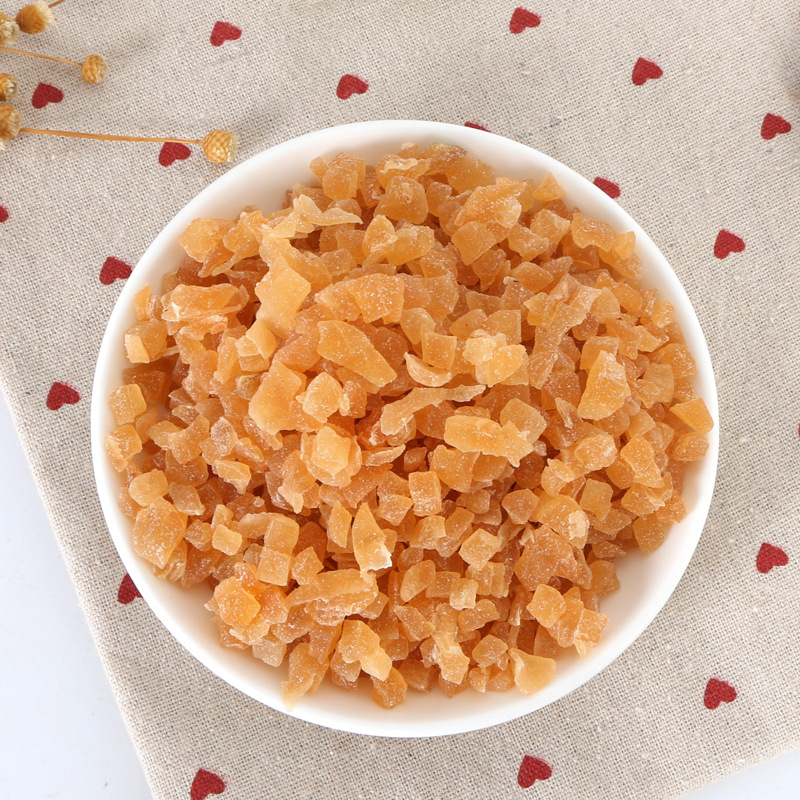
Also, candied diced formats help stabilize texture in baked goods. Still, sweetness contribution should be counted in the formula, because it can shift the balance.
FAQ (procurement-focused, with decisions in mind)
What should a COA include for freeze-dried mango powder?
A useful COA includes batch ID, production date, moisture, water activity (if defined), microbiological results, and any required heavy metals or pesticide results. Also, a consistent COA format makes trend tracking easy across months.
Why do moisture and aw both matter?
Moisture shows how much water is present. However, aw shows how “available” that water is, which better predicts caking and microbial risk. So, defining both avoids surprises.
How can batch consistency be verified without guesswork?
A retention sample plan plus clear batch records is the cleanest approach. Meanwhile, side-by-side color checks under the same light and dispersion-time checks in the same base reveal differences quickly.
What packaging details matter most for mango powder?
Moisture barrier is the priority: inner liner quality, sealing method, and how quickly bags are resealed after opening. Also, smaller inner packs can reduce repeated exposure in daily use.
What micro limits are commonly requested?
Common panels include total plate count, yeast and mold, coliforms, and pathogen absence requirements aligned to the destination market and application. Still, the exact limits should match regulatory and category needs, especially for dairy and supplements.
How should trial testing be structured for a new supplier?
A three-step approach works well: document review, bench tests, then a pilot run. For bench tests, dispersion, color, and warm-storage clumping checks give clear signals without expensive setup.
How does transport affect quality risk?
Long routes increase humidity and temperature exposure risk. Therefore, barrier packaging, pallet protection, and clear storage instructions matter as much as the powder itself.
What storage conditions keep mango powder stable after opening?
Cool and dry storage helps, and avoiding strong light and heat reduces aroma loss over time. Hailian’s mango powder listing explicitly notes cool, dry storage away from strong light and heat.
Why do some batches taste less “mango-forward” in sweet recipes?
Sweetness masking is common. So, small adjustments to sweetness level or acidity balance can restore mango perception without changing mango dosage.
When is it better to use slices or diced formats instead of powder?
Slices fit crunchy snack and topping concepts. Meanwhile, candied diced fits chewy inclusions and controlled piece dosing. Powder fits uniform flavor and color distribution in mixes, dairy bases, and glazes.
Closing notes + three next steps
Mango powder decisions tend to feel easy at the start. However, stable results come from matching the application to the spec, then matching the spec to a factory that can explain how it’s controlled. With that approach, a short list forms quickly: a freeze-dried mango powder manufacturer with traceability, documented controls, retention samples, and the right packaging discipline. For teams looking for a steady mango powder manufacturer, the cleanest path is a small trial, clear specs, and a simple qualification run that mirrors real production.
-
Request a sample set and run two tests: one cold-dispersion drink test and one dairy or glaze test, using real mixing conditions.
-
Align the spec table to the application: define moisture, aw, particle size, micro limits, and a color standard before scale-up.
-
Review mango formats side-by-side: compare freeze-dried mango powder, freeze-dried mango slices, and candied mango diced to match texture and process needs.