Choosing a freeze dried strawberry slices supplier is rarely about a perfect hero photo. In production, crunch has to survive humidity, vibration, and real handling. Also, strawberry flavor needs to stay bright across lots, not just once. This guide lays out a bulk buying approach that procurement and R&D teams can actually use, while staying focused on specs, applications, pairing ideas, and selection logic.
What makes strawberry slices worth the space in a formula
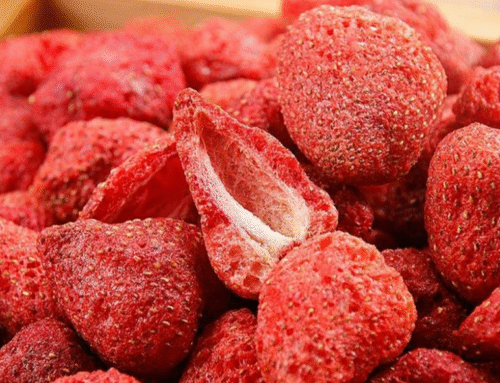
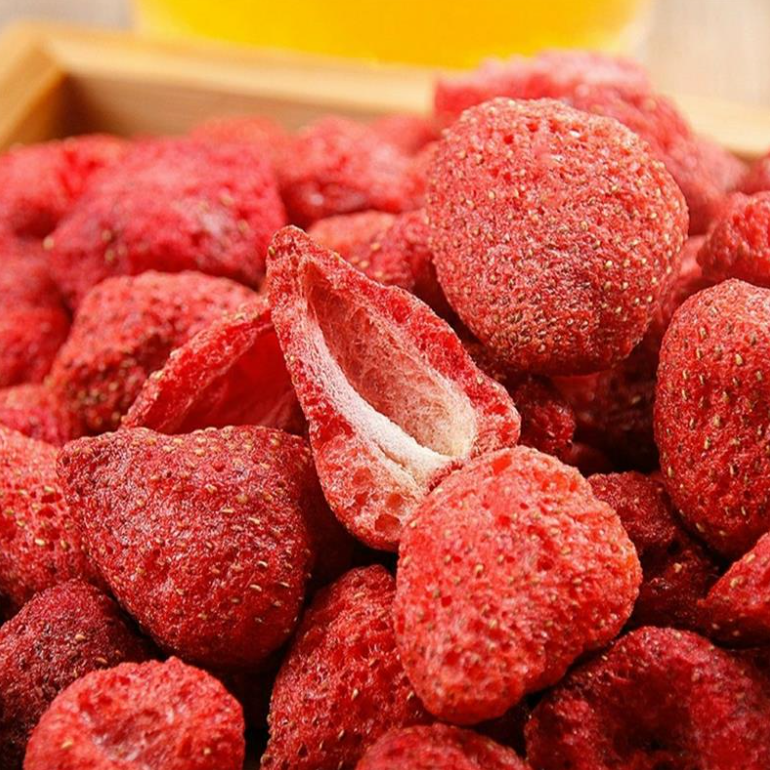
In dry formats, strawberry slices bring three things at once: color, aroma, and texture. The red tone reads as “real fruit” with no extra explanation. Meanwhile, the snap gives contrast next to oats, nuts, cereal puffs, or chocolate pieces. In short, slices do visible work with small inclusion rates.
For snack-style products, slices also help portion perception. A few intact pieces look premium even in a crowded blend. At the same time, the bite is light, not sticky, which keeps the eating experience clean. That clean finish matters when the base mix already has fat, sugar, or salt.
In beverage-adjacent concepts, slices behave differently. They soften, tint, and release aroma once hydrated. As a result, they fit “garnish + infusion” products, not instant powders. For fast flavor in drinks, strawberry powder usually plays the lead role.
Freeze-dried slices vs other strawberry formats
Not every “dried strawberry” performs the same. Freeze-dried slices are designed to stay porous and crisp. That structure is why they rehydrate quickly and release aroma fast. In contrast, air-dried or candied slices often feel chewy and sweet-forward.
This difference shows up in mixing behavior too. Freeze-dried fruit is light and brittle. So, fines and breakage become real costs in bulk shipments. Air-dried fruit is heavier and less fragile, yet it brings stickiness and moisture that can disrupt dry blends.
A practical sourcing plan usually uses more than one format. Slices handle visual impact and crunch. Diced pieces handle uniform distribution and lower breakage risk. Powder handles fast flavor, fast color, and easy dosing in blends.
The slice that performs well is defined by a few measurable specs
A spec should protect performance, not chase perfection. Strawberries vary by season, cultivar, and ripeness. So, the goal is a stable window that keeps finished products consistent.
Cut style and size distribution
Slice thickness controls snap and survival. Thicker slices often arrive with better integrity. Thinner slices can look delicate, yet they can generate more fines after shipping.
On JZ Hailian’s Freeze-dried strawberry slice page, the listed shape options include 5–7 mm slices and 5×5 mm / 10×10 mm dice. That range is useful for a multi-SKU roadmap, since one supplier can cover several inclusion styles.

Flavor direction: with sugar or without sugar
Strawberry can taste sharp in low-sugar bases. In those products, a sweetened option can soften acidity and widen appeal. On the other hand, unsweetened strawberry often tastes cleaner in chocolate and dairy, where richness already adds sweetness.
JZ Hailian’s strawberry slice and diced listings note “with sugar or without sugar” as an option. So, a clear decision belongs in the spec. Otherwise, sensory drift can appear even when the cut size stays stable.
Moisture and crispness stability
Crunch does not fail slowly. It fails fast once humidity gets involved. A crisp lot snaps cleanly and then melts into a bright strawberry finish. A compromised lot bends, chews, and tastes muted.
For that reason, moisture control should be treated like a performance requirement. Water activity (Aw) targets can also help when crunch is the core value. Even if a full Aw program is not used, a simple “snap + humidity exposure” check can catch weak lots early.
Fines, dust, and breakage limits
Bulk logistics turns fragile pieces into powder if packaging is weak. So, fines limits should be written into the contract spec. A simple sieve method works well for routine checks.
A practical approach looks like this:
-
Pull a representative sample from multiple cartons.
-
Weigh the sample and sieve it at an agreed mesh.
-
Calculate fines percentage and compare against the limit.
In addition, carton compression should be watched. If cartons arrive crushed, slices rarely stay intact. That is not a “product problem” alone; it is a packaging and logistics problem.
A short sensory scorecard that avoids arguments later
A sensory scorecard keeps decisions consistent across teams and time. It also reduces the “looks fine to me” debate during receiving.
A useful scorecard can include:
-
Color: red tone in an agreed range, no heavy browning.
-
Aroma: bright berry, no stale, cardboard, or burnt notes.
-
Texture: snap first, quick melt, minimal chewiness.
-
Finish: clean, sweet-tart, no bitterness.
-
Dust: limited fines at the bottom of the inner bag.
For stability, keep a sealed reference jar from an approved lot. Then compare each new lot against that baseline. This small habit prevents drift from becoming normal.
MOQ and packaging details that shape the real cost
Bulk cost is not only “price per kilo.” Handling loss, fines, and rework often cost more than the quote line. So, MOQ and packaging deserve upfront clarity.
MOQ: why early alignment matters
MOQ influences almost everything. It affects whether a special slice thickness is feasible. It also affects lead time planning and production scheduling. In practice, stable programs tie MOQ to forecast windows and seasonal availability.
When MOQ is unclear, trial orders can become expensive. A small order may require the same setup cost as a larger run. So, the real unit cost rises, even if the quote looks attractive.
Inner pack sizes and outer cartons
Bulk fruit ingredients often ship in multi-kilogram inner bags inside cartons. Pack size can vary by product and destination needs. So, it is better to confirm the exact inner bag weight and carton configuration during RFQ.
For strawberry powder on JZ Hailian’s Freeze dried strawberry powder page, bulk packaging is listed as 10–25 kg/bag/carton. That gives a useful reference point for how bulk packaging is handled on-site. Slice packaging may differ, yet the same barrier logic applies.
Barrier film, seals, and humidity defense
Freeze-dried fruit needs moisture protection. Barrier film and seal quality matter more than decorative printing. A micro-leak can soften a lot even when the product left the factory crisp.
For humid routes, container moisture control can help. Desiccants, liner bags, and careful pallet wrap reduce risk. Still, the strongest protection is a robust inner barrier plus reliable seals.
Pallets and container loading efficiency
Container efficiency depends on carton size, pallet pattern, and loading style. So, the most accurate plan comes from a packing list and carton dimensions. Even so, a few questions always help:
-
Is the shipment palletized or floor-loaded?
-
What is the carton gross weight and stacking limit?
-
Is corner protection used to reduce compression damage?
-
Is stretch wrap applied with consistent tension?
In short, good loading protects slice integrity. A crushed corner can turn intact slices into fines before the port gate.
Incoterms and freight choices that match ingredient risk
Freight terms define where control changes hands. For fragile, crunch-dependent ingredients, that boundary matters.
EXW: maximum control, maximum responsibility
EXW shifts logistics work early. It can offer pricing flexibility, yet it requires strong freight handling discipline. If inland trucking sits in humid weather, crunch can suffer before export even begins.
FOB: a practical boundary for many programs
FOB creates a clear handover at the port. It often improves visibility on export documentation and loading. With that clarity, it becomes easier to manage moisture control strategies during sea freight.
CIF: simpler planning, less visibility
CIF can simplify operations when logistics teams prefer one invoice. The trade-off is reduced control over carrier choice and container practices. So, CIF works best when packaging and moisture defense are already robust.
A reliable freeze dried strawberry slices supplier should be comfortable discussing Incoterms and routes. That discussion is not paperwork; it is part of keeping crunch intact.
A sampling plan that is simple, repeatable, and defensible
Sampling rules should fit real warehouse time. At the same time, they must be strong enough to detect drift.
Carton selection: avoid “top layer bias”
Sampling only the top pallet layer hides problems. Instead, pull cartons from different pallet positions. Include at least one carton from a lower layer, where compression is highest.
A workable approach:
-
Select cartons from multiple pallets when available.
-
Pull from top, middle, and lower stack positions.
-
Take sub-samples from each carton, not only the first bag section.
This method reduces the chance of missing fines that settle during transport.
Composite sampling for routine checks
Composite sampling saves time. Combine equal sub-samples into one composite for core tests such as aroma, snap, and fines. Then keep a sealed retention sample for traceability.
When higher risk exists, keep additional retains. New suppliers, new crop seasons, and new packaging formats deserve tighter retention practices.
Decision rules for acceptance
Decision rules should be written before the first shipment. Otherwise, every result becomes a negotiation.
A practical rule set can include:
-
Hold the lot if fines exceed the agreed limit.
-
Hold the lot if texture fails the snap test at receiving.
-
Hold the lot if moisture or Aw exceeds limits, when defined.
After that, run a second sampling round from different cartons. If the result repeats, treat it as confirmed.
COA and documentation that keeps approvals moving
Documentation is not an afterthought. It reduces delays and protects traceability.
A typical documentation pack can include:
-
COA with batch/lot identification.
-
Microbiology panel per destination standards.
-
Heavy metals and pesticide residue tests when required.
-
Allergen and cross-contact statement for the facility.
-
Non-GMO statement when requested by the program.
-
Irradiation statement when requested by the program.
-
Country of origin and traceability codes.
For compliance references, the Certificate page can support internal review processes. Meanwhile, the final decision should rely on shipment documents, not only web page text.
A note on shelf life listings
Shelf life can appear in different places on product pages. Sometimes, top summaries and detailed tables do not match due to template updates. So, the clean solution is simple: treat the COA and shipment documents as the final reference. That approach avoids locking a number that later contradicts paperwork.
Nonconformance handling that stays practical
Problems happen in real logistics. What matters is a clear path for evidence and resolution.
Case 1: “Soft within 30 minutes after opening”
This scenario often gets blamed on the supplier. Yet plant humidity is frequently the root cause. A warm, humid room can soften slices quickly once bags open.
A practical response starts with measurement. Record room humidity and temperature during opening. Then compare snap performance between a freshly opened bag and a bag opened after exposure.
If the room is humid, sealing discipline matters. Reseal speed, liner bags, and smaller dispensing containers can protect crunch during production shifts.
Case 2: “Dusty after mixing”
Dust can come from several sources. Over-mixing can shatter slices. Carton compression during transport can create fines before mixing even starts. Also, aggressive augers can grind fragile pieces.
A practical response uses a controlled test. Mix for short and long times, then compare fines and piece integrity. If fines rise sharply with time, mixing intensity is the driver.
Packaging also matters. If cartons arrive crushed, the root cause often sits in stacking limits and pallet protection. Fixing pallets can reduce fines more than changing the slice itself.
Case 3: “Color looks different from last lot”
Natural fruit varies. Strawberry color can shift within a normal range across seasons. Still, large shifts can reflect raw material differences or storage issues.
A practical response uses the reference jar. Compare the new lot against the baseline. If drift exceeds the agreed window, treat it as nonconforming.
Resolution paths should be pre-agreed. Common options include replacement, credit, partial discount, or third-party testing. A clear process prevents delays and keeps operations calm.
Application guidance: where slices shine, and where another format wins
Slices work best when the base system is dry. They also work best when the product story values “real fruit pieces.” Still, each category has its own failure modes.
Snacks and trail mixes
Snack mixes reward intact slices. They look premium, and the crunch stands out next to nuts and seeds. Also, strawberry aroma lifts mixes that lean salty or roasted.
Pairing ideas that tend to work well:
-
Strawberry + almond for bakery warmth.
-
Strawberry + coconut for creamy sweetness.
-
Strawberry + dark chocolate for contrast and depth.
-
Strawberry + yogurt notes for a “berries and cream” feel.
-
Strawberry + mild mint for a fresher finish.
Salt matters in this category. A small salt note can make berry aroma feel stronger. That effect often improves perceived sweetness without added sugar.
Cereal and granola
Cereal blends care about fines. Pink dust in a bag looks messy and creates uneven flavor distribution. So, diced pieces often perform better than large slices in high-shear blending.
JZ Hailian’s Freeze dried crushed strawberries listing includes dice sizes such as 3×3, 5×5, 8×8, and 10×10 mm. Those sizes help match piece scale to base density.

Milk contact changes everything. Slices soften quickly once hydrated. That softening can be a feature when the goal is aroma release into milk. Still, crunch disappears fast, so the product promise should be aligned to that behavior.
Bakery toppings and inclusions
Inside wet batter, freeze-dried slices rehydrate and soften. The taste can stay good, yet the crunch is gone. So, topping applications usually perform better than interior inclusions.
For toppings, timing is a useful lever. Add slices after baking, not before. Alternatively, add them into a fat-based glaze, where moisture migration is slower.
For inclusions inside dough, diced pieces often behave more predictably. Smaller pieces distribute evenly and reduce voids. Also, they survive mixing better than large slices.
Chocolate and confectionery
Chocolate is low water, so crunch can last longer. Still, temperature swings can introduce condensation risk. A cold-to-warm transition can pull moisture onto inclusions. That moisture softens fruit quickly.
In this category, pairing is the real advantage. Dark chocolate adds bitterness and depth, which highlights berry brightness. White chocolate creates a creamy baseline that makes strawberry feel sweeter. Meanwhile, roasted nuts add warmth that rounds acidity.
Placement matters too. Top-decorated inclusions often keep their identity better than fully mixed inclusions. That simple choice can reduce breakage and dust.
Dairy and yogurt concepts
Dairy brings moisture, so crunch will not last indefinitely. Even so, the softening curve can create a pleasant “jammy” bite. That texture shift often feels indulgent.
Separated compartments can protect crispness longer. Dry topping sachets can also help. In addition, using smaller pieces can reduce soggy “big bite” moments.
Beverage garnish and infusion kits
Slices can work as garnish. They soften, tint, and release aroma in hot tea or sparkling water. That effect looks premium in transparent cups. Still, slices are not instant-dissolve ingredients.
For instant drinks, strawberry powder is a better tool. It disperses, colors, and flavors quickly. It also allows precise dosing and consistent results across servings.
A practical strawberry format toolkit for long product roadmaps
A single product line rarely stays a single product line. Over time, new SKUs appear, and the format toolkit matters more.
Whole strawberries for premium visual impact
Whole berries look dramatic. They also communicate “real fruit” instantly. That makes them strong for snack packs and decorative uses.
On JZ Hailian’s Freeze dried strawberries page, whole berries are presented alongside slice and dice options. This helps format planning under one supply umbrella.

Whole berries also have risks. They break under compression and vibration. So, cartons, pallet patterns, and stacking limits matter even more here.
Powder for fast flavor, fast color, and controlled dosing
Powder is efficient. It delivers strawberry impact without relying on intact pieces. That makes it useful for drinks, frostings, fillings, yogurt bases, and dry blends.
JZ Hailian’s Freeze dried strawberry powder listing includes bulk packaging information and moisture guidance. That makes it easier to build storage SOPs around real pack formats.

Powder also has its own failure mode: clumping. In humid air, powder can cake quickly after opening. So, sealing discipline and desiccant use become important in daily operations.
Diced and crushed pieces for even distribution
Diced pieces sit between slices and powder. They maintain visual fruit identity while improving dispersion and reducing breakage. That balance makes them a common choice for granola, bars, and chocolate inclusions.
Crushed pieces can also act as a topping. They deliver strawberry aroma and color without large pieces that crack during handling. This format often improves dosing consistency.
Buyer-style selection logic, without the buzzwords
A selection decision can be built around finished-product risk. Different products stress the ingredient in different ways. So, the “best” supplier is the one that performs under the right stress.
If the product is cereal or granola
Fines control matters most. Dust creates messy packaging and uneven dosing. So, diced formats and stronger cartons often win here.
If the product is premium snack mix
Visual identity matters. Intact slices and whole berries support a premium look. So, slice thickness and carton compression resistance become key.
If the product is chocolate-coated
Moisture protection matters. Condensation events ruin crunch. So, packaging barrier, seal quality, and temperature control in storage become the focus.
If the product is beverage or yogurt
Speed of flavor release matters. Powder usually performs best in these systems. Meanwhile, slices work as garnish or topping, not as the main flavor engine.
RFQ template that a sourcing team can copy and reuse
This template keeps requests consistent across quotes. It also forces clarity on the issues that typically cause disputes later.
RFQ subject line
Freeze-dried strawberry slices — bulk quote request
Product definition
-
Product: freeze-dried strawberry slices
-
Shape: target slice thickness and allowable range
-
Optional formats: dice sizes (if needed)
-
Flavor: sweetened or unsweetened definition
-
Sensory targets: aroma, taste, texture description
Physical specs
-
Size distribution method and limits
-
Fines limit (%), with sieve mesh and method
-
Foreign material control expectations
Moisture and stability
-
Moisture target and test method
-
Water activity target (if required), with method
-
Storage conditions for best crunch retention
Packaging and logistics
-
Inner bag material and barrier expectation
-
Inner bag net weight and carton configuration
-
Carton stacking limit and pallet pattern
-
Container moisture control approach for sea freight
Documentation
-
COA list and batch traceability
-
Microbiology panel per destination
-
Heavy metals and residues where required
-
Allergen, non-GMO, irradiation statements where requested
-
Certificates reference for audit support
Commercial terms
-
MOQ per format
-
Price tiers by volume
-
Lead time for samples and production
-
Incoterms: EXW / FOB / CIF options
-
Payment method options
Nonconformance process
-
Hold and evidence rules (photos, sampling, retention)
-
Re-test and third-party lab option
-
Resolution options: replacement, credit, partial discount
A qualified freeze dried strawberry slices supplier will respond clearly to these points. When the answers stay vague, hidden costs often appear later.
A one-page bulk checklist for receiving teams
Receiving teams need fast checks. Long lab lists are useful, yet quick screening prevents bad lots from entering production.
A practical receiving checklist:
-
Carton condition: no crushing, no water marks.
-
Inner bag integrity: no pinholes, seals intact.
-
Aroma check: bright berry, no stale notes.
-
Snap check: clean fracture, no leatheriness.
-
Dust check: limited fines at bag bottom.
-
Label check: lot code matches COA.
Keep one sealed retention bag section for traceability. Then store it under controlled conditions for reference.
FAQ: common questions in bulk strawberry slice programs
How fast do freeze-dried slices soften after opening?
Softening depends on room humidity and exposure time. In humid rooms, texture can change quickly. So, faster resealing and smaller staging containers help.
Why do some lots taste “flat” even when color looks good?
Aroma compounds vary by fruit maturity and storage history. Also, heat exposure during transport can reduce aroma. A dry aroma check helps catch this early.
Is thicker always better for slices?
Thicker often survives shipping better. Still, thick slices can feel too chunky in delicate blends. So, thickness should match the target eating experience.
Why can diced pieces outperform slices in granola?
Diced pieces distribute more evenly. They also break less during mixing. This improves piece count consistency across servings.
What causes pink dust inside finished packs?
Dust often comes from fines created during shipping or mixing. Carton compression and over-mixing both contribute. So, packaging strength and mix intensity deserve attention.
Do sweetened slices always perform better?
Sweetened slices can taste rounder in low-sugar bases. Unsweetened slices can taste cleaner in dairy and chocolate. The best choice depends on the base matrix.
What is the fastest way to check lot consistency?
Use a sealed reference jar. Compare aroma, snap, and fines visually against that baseline. This simple practice catches drift faster than spreadsheets.
Can slices be used inside baked products?
Slices soften in wet batters. For crunch, topping applications work better. Diced pieces can also work when even dispersion is the priority.
How does sea freight affect crunch?
Long sea routes increase humidity exposure time. Weak barrier film and poor seals amplify risk. So, moisture defense should be planned as part of logistics.
How should shelf life be handled when page text varies?
Shipment documents and COA should guide the final shelf life value. This approach avoids conflicts between web listings and paperwork.
What makes an ingredient program feel “stable” over months?
Stable specs, consistent packaging, and consistent documentation create stability. In short, predictability reduces rework and production adjustments.
Related products and internal resources
Strawberry formats for bulk applications
-
Freeze-dried strawberry slice — slices and dice options for snacks and blends.
-
Freeze dried strawberries — whole berries for premium visuals and toppings.
-
Freeze dried crushed strawberries — diced sizes for uniform mixing and lower breakage.
-
Freeze dried strawberry powder — fast flavor and color for drinks and fillings.
Support pages for sourcing workflows
-
Products catalog — broader fruit and vegetable formats for line extensions.
-
Certificate — compliance reference for internal review.
-
Inquiry — RFQ submission for pricing and lead time confirmation.
Summary and next steps
Freeze-dried strawberry slices can be a high-impact ingredient when crunch and aroma stay stable. In practice, stability comes from clear specs, controlled moisture exposure, and packaging that survives real transit. Also, a format toolkit makes product development easier, since slices, diced, and powder solve different problems.
Three actionable recommendations:
-
First, lock a spec that includes cut range, fines limit, and sensory window.
-
Next, align packaging and freight terms with humidity and compression risk.
-
Finally, keep reference samples and use the same receiving checks every time.
With that structure, selecting a freeze dried strawberry lices supplier becomes a repeatable process, not a gamble.